
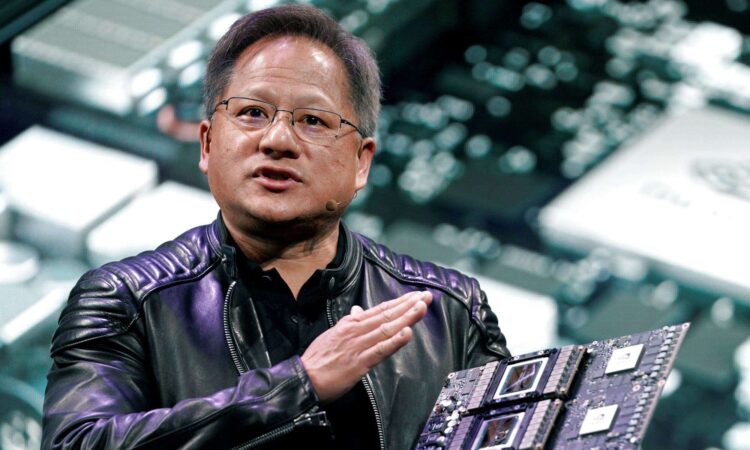
Jensen Huang, the co-founder and CEO of Nvidia, has a fortune tied to the massive growth of the semiconductor industry. To understand his financial standing, looking at the jensen huang net worth reveals an estimate of approximately $110 to $120 billion as of 2026. This makes him one of the wealthiest people on the planet and the richest person ever to have come from Taiwan.
What is remarkable about Jensen Huang is not just the scale of his wealth, but the speed at which it grew. As recently as 2022, his net worth was under $10 billion. The explosion of artificial intelligence and the world’s insatiable demand for Nvidia’s GPUs changed everything.
Quick Facts
| Detail | Information |
|---|---|
| Full Name | Jen-Hsun Huang |
| Date of Birth | February 17, 1963 |
| Birthplace | Tainan, Taiwan |
| Net Worth (2026 est.) | ~$110-$120 billion |
| Company | Nvidia Corporation (NASDAQ: NVDA) |
| Role | Co-Founder, President & CEO |
| Source of Wealth | Nvidia stock holdings and compensation |
| Education | B.S. from Oregon State; M.S. from Stanford |
From Dishwasher to Billionaire: The Nvidia Story
Jensen Huang moved to the United States as a teenager and worked as a dishwasher and a waiter at Denny’s while studying. That gritty beginning is a detail he often repeats in speeches, and it says something about the distance he has travelled.
In 1993, he co-founded Nvidia alongside Chris Malachowsky and Curtis Priem with a clear idea: build a chip that could accelerate graphics for personal computers. What they could not have fully anticipated was that the same parallel processing architecture that makes games look stunning would turn out to be the perfect tool for training artificial intelligence models.
For its first decade, Nvidia was a graphics chip company. The real inflection point came in 2006 when Nvidia released CUDA, a programming platform that let developers use GPU power for general computing. Researchers quickly realised it could speed up machine learning dramatically. That decision quietly laid the groundwork for everything that followed.
How the AI Boom Multiplied His Wealth
When ChatGPT launched in late 2022, the demand for AI infrastructure surged overnight. Training large language models requires enormous amounts of GPU computing power, and Nvidia’s H100 and A100 chips became the hardware of choice for every major AI lab in the world, from OpenAI and Google to Meta and Amazon.
Nvidia’s revenue went from around $27 billion in fiscal 2023 to over $130 billion in fiscal 2025. The stock price followed. Since Jensen Huang holds roughly 3-4% of Nvidia shares, that revenue growth translated into a historic surge in personal wealth.
| Year | Estimated Net Worth | Key Driver |
|---|---|---|
| 2019 | ~$3.3 billion | Steady GPU growth in gaming |
| 2021 | ~$7 billion | Data centre revenue rising |
| 2022 | ~$9 billion | Crypto mining demand spike |
| 2023 | ~$35 billion | ChatGPT triggers AI hardware demand |
| 2024 | ~$80 billion | Nvidia becomes $2 trillion company |
| 2026 | ~$110-120 billion | AI infrastructure spending accelerates globally |
Salary vs. Stock Holdings
Jensen Huang’s official annual salary is famously modest for a CEO of his stature. His base pay is around $1.2 million per year, with total compensation including bonuses typically coming in under $3 million annually. His real wealth is almost entirely in Nvidia equity.
He has sold portions of his stake over the years as part of pre-planned trading arrangements, but retains enough to make him one of the largest individual shareholders of any major technology company in the world.
How He Compares to Other Tech Leaders
| Person | Company | Net Worth (2026 est.) |
|---|---|---|
| Elon Musk | Tesla, SpaceX, xAI | ~$250-280 billion |
| Jeff Bezos | Amazon | ~$200-220 billion |
| Jensen Huang | Nvidia | ~$110-120 billion |
| Mark Zuckerberg | Meta | ~$180-200 billion |
| Larry Ellison | Oracle | ~$140-160 billion |
Final Thoughts
Jensen Huang’s net worth is a reflection of three things: a company he built with genuine technical vision, a market timing that no one could have fully planned, and a relentless focus on a single architecture that happened to be exactly what the AI era needed.
He is, by any measure, one of the most consequential people in technology today, not because of his wealth, but because the chips his company makes are literally powering the AI systems reshaping industries worldwide. The money is simply the market’s way of keeping score.