The Arch Support Architecture: Why the Steel Shank is Non-Negotiable for Linemen

If you’ve spent any time working the lines in Texas, you know that the ground is just a suggestion. Most of your day is spent suspended somewhere between the caliche and the clouds, trusting your life to a leather belt and the narrow edge of a steel gaff. Now, most boots you find at a big-box store are made for walking, maybe a bit of light hiking. But lineman climbing boots? They aren’t footwear; they’re structural engineering for your feet.
When you’re “hitching” up a pole, you aren’t standing on flat ground. You are essentially standing on a knife-edge. Every ounce of your body weight, plus the forty pounds of lineman equipment and hand tools hanging off your belt, is concentrated on a strip of steel about an inch wide. Without the right “architecture” inside your boot, that pressure goes straight into your plantar fascia. We’re talking about the kind of foot fatigue that doesn’t just go away with a weekend on the recliner-we’re talking about long-term deformity. That’s why, in this trade, a lineman boots with steel shank setup isn’t a luxury; it’s a non-negotiable requirement.
Standing on a Knife-Edge: The Physics of the Shank
Let’s look at the mechanics of what happens when you’re high up on a stick. When you kick that gaff into a cedar pole, your foot wants to wrap around the spike like a piece of overcooked spaghetti. Gravity is pulling your heel and your toes down, while the gaff is pushing up into your arch.
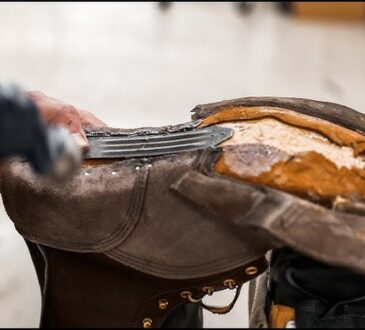
This is where the steel shank earns its keep. A shank is a thin, rigid strip of metal tucked between the insole and the outsole. In climbing boots, this shank is usually “extra-wide” and “extra-thick.” It acts like a bridge girder, distributing your weight across the entire length of the boot rather than letting it collapse onto the arch. It creates a solid, flat platform. Think of it like the difference between standing on a ladder rung in flip-flops versus standing on a solid floor. Which one do you think your feet would prefer after six hours of storm restoration?
Foot Fatigue and the “Lineman’s Limp”
You’ve probably seen the older guys at the yard-the ones who’ve been in the hooks since the 90s. Some of them walk with a distinct “hitch” in their giddy-up. A lot of that comes from years of using inferior gear that allowed the arch to collapse.
Medical studies on “occupational podiatry” show that repetitive, high-pressure loading on the mid-foot leads to a condition called Plantar Fasciitis, or even worse, “fallen arches.” Once those ligaments stretch out, they don’t just snap back. By wearing lineman pole climbing boots with a heavy-duty steel shank, you are physically preventing that ligament from over-stretching. You’re essentially wearing a structural brace that allows you to focus on the task at hand-like using your Lineman Impact Wrenches or navigating an electrical hot stick around a live transformer-without your brain screaming about the fire in your feet.
Hand Tools, Belt Weight, and the Cumulative Load
We often forget that a lineman’s weight isn’t just what the scale says in the morning. By the time you’ve strapped on your Lineman Climbing Gear, grabbed your Crimpers, and stuffed your pouches with nuts, bolts, and lineman accessories, you’ve added a significant “payload” to your frame.
Every extra pound increases the “bowstring” tension on your foot. If you’re using climbing boots that lack a rigid shank, that extra weight is focused entirely on the narrow point where your gaff meets the boot. It’s a recipe for disaster. High-quality lineman boots with steel shank construction are designed to handle this “overload” condition. They ensure that whether you’re carrying a heavy crossarm or just your daily hand tools, your foundation remains as rigid as the pole you’re climbing.
Steel vs. Composite: Does Material Matter?
In the world of mens ppe, we see a lot of “composite” shanks popping up. They’re lighter, and they don’t trip metal detectors. For a hiker, they’re great. For a lineman? Not so much.
- Steel Shanks: These provide the maximum amount of “torsional rigidity.” They don’t flex, they don’t bow, and they don’t give up. For lineman climbing boots, steel is still the king because it can handle the pinpoint pressure of a gaff without deforming.
- Composite Shanks: While they offer some support, they often have a “memory.” Under extreme pressure, they can flex, and over time, that flex can lead to the very foot fatigue we’re trying to avoid.
If your job description involves “climbing,” you want the cold, hard reliability of steel under your feet. It’s about having a tool that’s as tough as the lineman equipment you carry on your belt.
The Long-Term Investment: Your Career on Two Feet
Let’s be real: professional lineman boots aren’t cheap. You might look at a pair of handcrafted, steel-shanked boots and wince at the price tag. But I want you to look at it as an insurance policy.
A thirty-year career in the utility industry is a marathon, not a sprint. If you skimp on your footwear in your twenties, you’ll be paying for it in orthopedic surgeries in your fifties. Investing in the right Lineman Climbing Gear from day one-specifically lineman boots with steel shank support-is how you ensure you’re still able to walk the golf course or chase your grandkids when you finally hang up the hooks.
Conclusion
In the end, the most important piece of lineman equipment you own isn’t the one that cuts the wire or turns the bolt-it’s the one that supports the person doing the work. The “arch support architecture” provided by a high-quality steel shank is what allows us to do the impossible: stand on a tiny spike of metal forty feet in the air and do a precision job. Don’t let your arches be the weak link in your safety chain. Strap on a pair of real lineman climbing boots, feel that rigid support, and go to work knowing your foundation is solid.
Unique FAQs
1. Can I use regular logger boots for pole climbing? Not usually. While logger boots have the right look, many lack the “extra-wide” steel shank required to handle the specific pressure of climbing gaffs. Always check if they are specifically rated as lineman boots.
2. How do I know if my steel shank is failing? If you start feeling the “point” of your gaff through the bottom of your boot, or if the boot starts to feel “mushy” in the arch when you’re on a ladder or a pole, the shank or the internal midsole has likely compromised.
3. Do steel shanks make the boots too heavy for ground work? They add a bit of weight, but most modern lineman boots with steel shank designs use lightweight alloys or tapered designs to keep the weight manageable. The trade-off in support is well worth the few extra ounces.
4. Will a steel shank set off a voltage detector? No. The shank is buried deep within the insulating layers of the boot. As long as your lineman boots are EH (Electrical Hazard) rated, the steel shank is safely isolated from any electrical path.
5. How long does a pair of professional climbing boots typically last? For a daily climber, a good pair should last 12 to 24 months before needing a resole. However, the internal steel shank usually lasts the life of the leather as long as the boot is well-maintained.