Guide to Graphic Facilitation: From Doodling to Clarity in Meetings and Workshops

Modern work is full of complex problems, fast changes, and teamwork across many roles. In this kind of environment, graphic facilitation is a powerful way to help people understand each other, work better together, and find clear solutions. By turning ideas into simple drawings, icons, and short words, teams can see what they are talking about instead of only hearing it. This makes meetings more focused, learning easier, and cooperation stronger. Visual methods also make people feel more involved and motivated, which leads to better results for both teams and organizations.
1. Understanding Graphic Facilitation and Why It Works
What Is Graphic Facilitation?
Graphic facilitation is a way to support group work by using simple drawings, symbols, and short text during meetings, workshops, and planning sessions. Instead of only talking, a facilitator turns key ideas into visible pictures. This helps people follow the conversation, stay focused, and remember what was discussed.
The goal is not to create perfect art, but to make ideas easy to see and understand. When thoughts are on the wall or screen, everyone can look at the same thing and work with it together.
Why Visuals Improve Cooperation
People often think they understand each other, but everyone sees the world in a different way. When ideas are only spoken, misunderstandings can happen easily. Visuals help bring different views into one shared picture.
Simple drawings make it easier to talk about problems, needs, and solutions. They invite people to join the discussion and share their ideas. This builds trust, improves cooperation, and makes teamwork more open and active.
How Graphic Facilitation Helps Solve Complex Problems
Many challenges at work are not simple. They involve many people, steps, and viewpoints. Graphic facilitation helps by showing both the big picture and the details at the same time.
Processes can be shown as steps with arrows. Problems can be drawn as blocks, and solutions as paths forward. When people can see how things connect, they understand the situation better and can work together to find clearer and stronger solutions.
2. How to Use Graphic Facilitation in Practice
Basic Skills to Get Started
You do not need special talent to start using graphic facilitation. Anyone can draw basic shapes like circles, squares, lines, and simple people. These shapes are enough to show ideas clearly. What matters most is practice, not perfect drawings.
Start with these basic elements:
- Frames – boxes to organize ideas
- People – simple figures to show roles
- Places – rooms or spaces
- Processes – steps and arrows
- Communication – speech bubbles or lines
- Text – short words and titles
- Effects – stars or marks to highlight key points
Using Visuals in Meetings and Workshops
There are two simple ways to use visual methods in group work:
Visual presentations
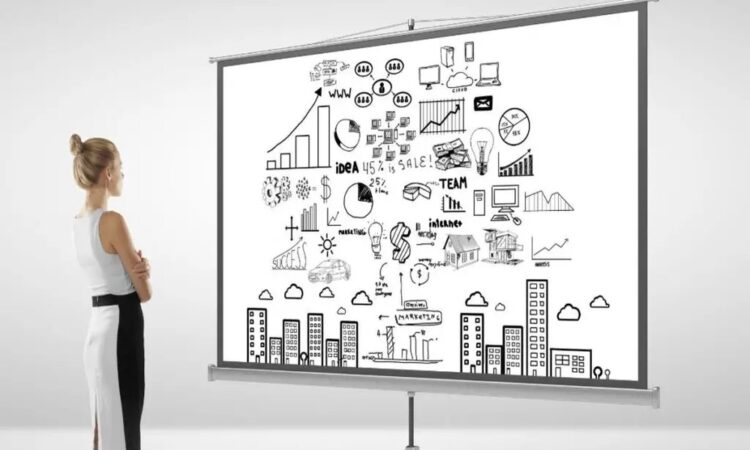
Instead of only using slides, draw your key messages on large paper or a board. These visuals can stay visible during the meeting, helping people connect ideas and remember important points.
Visual templates
Templates are simple drawings with empty spaces where people can add their ideas. This invites active participation and helps people feel part of the process. It turns passive meetings into real teamwork.
Using Graphic Facilitation in Online Meetings
Visual methods also work well in online meetings. Digital whiteboards let you draw, write, and organize ideas on screen. Participants can add their own input in real time.
Keep drawings simple and clear when working online. Small details are hard to see on screens, so use big shapes, clear lines, and short words. The goal is to support understanding, not to create detailed artwork.
Being Aware of Culture and Meaning
Symbols and colors can have different meanings in different cultures. What feels friendly in one place may feel strange or rude in another. When working with international teams, use simple and neutral symbols.
Basic shapes and clear icons are usually safe choices. If you are unsure, ask the group if the visuals make sense to them. The goal is to include everyone and avoid confusion.
Is Drawing at Work Unprofessional?
Some people worry that drawing at work looks childish. In reality, adults learn and think better when ideas are visual. The brain understands and remembers information more easily when words and images are used together.
Graphic facilitation works well for leaders, project teams, and strategy groups. It supports serious work by making thinking clearer, teamwork stronger, and results easier to reach.