
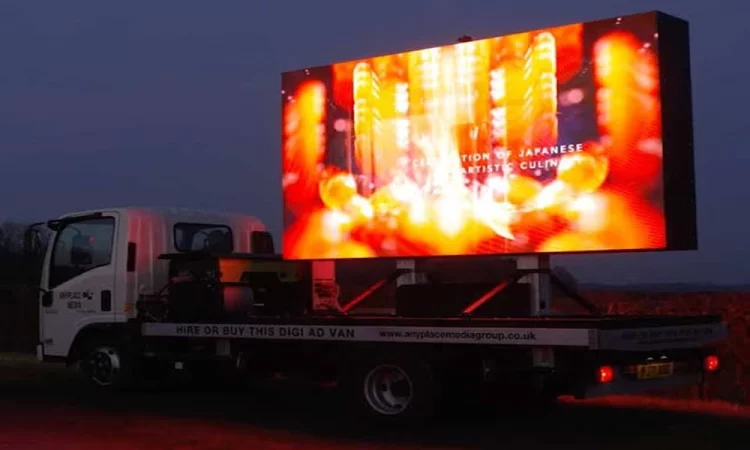
LED ad trucks give agencies a way around the single biggest delay in outdoor advertising, which is the time it takes to get a fixed display up and running. For LED ad trucks, the destinations are reached as they begin their routes, unlike billboards that require permits, leases, and installation dates. Multiple clients in a single city require agencies to move as quickly as possible. If it takes a campaign three weeks to reach every district, it can lose relevance. A mobile billboard truck can shift from a downtown business core to a suburban retail strip within the same day, turning what would normally require separate bookings into one continuous route. This is what covering districts faster actually means in practice, not a higher volume of displays, but a shorter gap between deciding to reach a district and actually being seen there.
District coverage
Agencies working with LED ad trucks follow a fairly consistent sequence when planning multi-district coverage, refining it slightly with each campaign as certain districts prove more responsive than others.
- Step one – Groups target districts by proximity, so routes minimise dead travel time between zones and keep the truck within active coverage for a larger share of the day.
- Step two – Schedules high traffic districts during their peak hours, then moves to secondary zones during quieter windows when a slower pace still delivers useful exposure.
- Step three – Assigns creative variants suited to each district’s audience, since a message built for a business core rarely lands the same way in a residential strip.
- Step four – Builds in short dwell periods at high visibility points within each district rather than constant movement, giving pedestrians and stopped traffic enough time to register the display.
- Step five – Reviews coverage gaps after the first pass through all target districts and adjusts the route for a second sweep through any area that received lighter exposure than planned.
- Step six – Consolidates reporting across all districts covered within a single deployment day, giving the agency a clear picture of where the truck spent the most time relative to each district’s priority level.
- Step seven – Feeds that reporting back into the next day’s route, so coverage decisions improve across a multi-day campaign rather than repeating the same pattern regardless of results.
- Step eight – Flags any district that consistently underperforms on exposure time, prompting a route redesign before the issue compounds across a longer campaign run.
This sequence lets one unit function as several static campaigns would, without the lag time each new location would otherwise require. Agencies managing several accounts within the same city often lean on this exact structure, since it scales from a single client campaign to a full multi-client rotation without needing a different planning model each time. A route built for one client’s three districts can expand to five or six districts across two clients simply by extending the same grouping and scheduling logic, rather than starting the planning process over from nothing.
LED ad trucks give agencies a way to compress district coverage into timeframes that static formats cannot match. This step by step approach to route grouping, scheduling, dwell time, and gap review explains why the format has become a practical tool for agencies managing broad geographic campaigns under tight deadlines, particularly when client rosters span districts that would otherwise require separate bookings and separate timelines to cover individually.